
Viral load testing is central to the management of hepatitis B virus (HBV), hepatitis C virus (HCV), and human immunodeficiency virus (HIV) infections. Plasma preparation tubes (PPTs) are widely used in molecular diagnostics because they integrate blood collection, plasma separation, transport, and storage into a single device. Recent studies, however, present a nuanced picture of their performance that warrants careful examination.

1. Recent Evidence: Validation in ResourceLimited Settings
In July 2025, Okwuraiwe and colleagues published a crosssectional study in the Journal of Applied Laboratory Medicine evaluating PPT performance in HIV viral load testing.
Background: In regions such as subSaharan Africa, PCR laboratories are centralized, and samples must be transported from remote health centers under cold chain conditions—a costly and logistically challenging requirement. PPTs were designed in part to reduce this dependency.
Methods: The study enrolled 115 people living with HIV. Three tubes were collected per participant: one standard EDTA tube (nongel) and two PPTs. Plasma from the first PPT was tested within six hours (Roche COBAS 6800 platform) and compared with EDTA tube results. The second PPT was stored at room temperature (20–28°C) for 24 hours before testing.
Results: No statistically significant difference was observed between PPT and EDTA results (Wilcoxon test, P=0.91). Sensitivity and specificity for both sameday and 24hour testing were 100%.
Conclusion: PPTs perform equivalently to standard EDTA tubes for HIV viral load testing and can be deployed in remote settings for sample collection and roomtemperature transport to central laboratories (Okwuraiwe et al., 2025).
2. Historical Evidence: Overestimation Under Specific Handling Conditions
Alongside the above findings, a body of evidence from 2006 to 2023 has documented viral load overestimation with PPTs under certain handling conditions.
2006: Griffith et al. reported that among samples with viral loads near the lower limit of detection, 40% of plasma pairs that were undetectable in EDTA tubes showed detectable lowlevel HIV RNA in corresponding PPTs (Griffith et al., 2006).
2007: GarcíaBujalance et al. demonstrated that freezing plasma in the primary PPT tube artificially elevates HIV1 viral load, as compared to aliquoting plasma to a secondary tube before freezing (GarcíaBujalance et al., 2007).
2009: Kran et al. elucidated the mechanism in the Journal of Clinical Microbiology. When PPTs are centrifuged before transport, residual cells containing HIV1 nucleic acids remain in the plasma fraction. These cellassociated nucleic acids contribute to measured RNA copy numbers, particularly in lowviralload samples. A retrospective analysis of 4,049 samples with <1,000 copies/mL confirmed the phenomenon. The study also showed that recentrifugation before analysis removes these cells and restores accuracy (Kran et al., 2009).
2019 Systematic Review: Luo et al. published a systematic review in PLoS One pooling data from 16 studies covering 6,141 individuals. It confirmed that PPTs can yield significantly elevated results (>0.3 log copies/mL) but noted that when manufacturer instructions are followed or when PPTs are recentrifuged before testing, the average difference from EDTA results ranged from 0.03 to +0.08 log copies/mL (Luo et al., 2019).
2020 Clinical Case Series: A community clinic in San Antonio, Texas, reported 20 unexpectedly elevated HIV viral loads (200–2,530 copies/mL) in previously suppressed patients between January and March 2020. The root cause was traced to inadequate separation of cellular elements during PPT processing (San Antonio case series, 2020).
3. Interpreting the Evidence: Protocol Determines Performance
The 2025 Nigeria study and the historical evidence are not contradictory. The difference lies in handling protocols:
In the Nigeria study, PPTs were tested within six hours or after 24 hours at room temperature—without centrifugation before transport.
The overestimation reports are consistently associated with centrifugation before transport or freezing in situ.
When PPTs are processed according to optimized protocols—including recentrifugation before analysis—results align with EDTA tubes (Kran et al., 2009; Luo et al., 2019).
Thus, PPT reliability is not an inherent property but a function of adherence to proper procedures.
4. Practical Recommendations for the Laboratory
Based on the evidence, laboratories using PPTs should consider the following practices:
1. Avoid centrifugation before transport. If samples must be shipped, transport whole blood at room temperature and centrifuge upon arrival at the testing laboratory.
2. Transfer plasma to a secondary tube before freezing. Do not freeze plasma in the primary PPT (GarcíaBujalance et al., 2007).
3. Recentrifuge samples that have been centrifuged and transported before analysis. This step removes residual cells and prevents overestimation, particularly in lowviralload specimens (Kran et al., 2009).
4. Establish and enforce standard operating procedures (SOPs) . Centrifugation conditions (speed, time, temperature), transport requirements, storage specifications, and freezing protocols should be clearly documented and staff trained accordingly.
5. Exercise particular care with lowviralload samples, as the risk of overestimation is greatest in this range.
5. Product Design Features and Applications
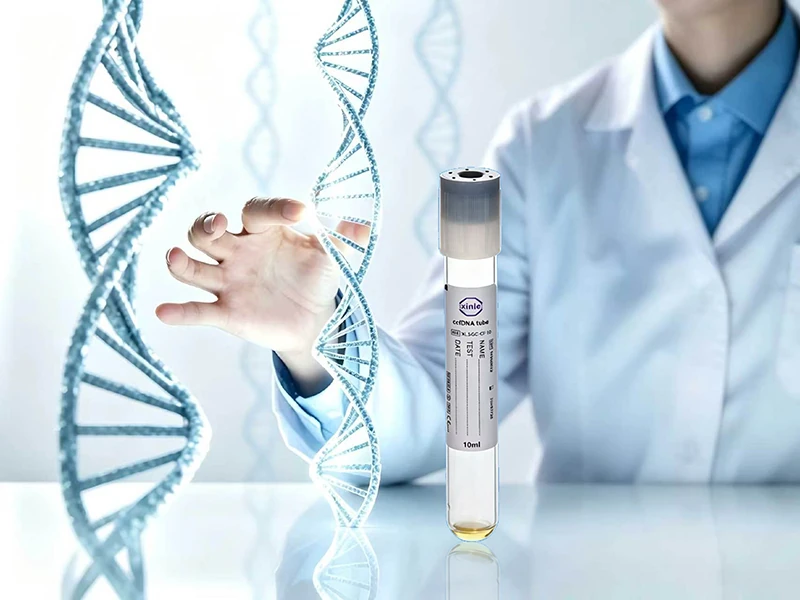
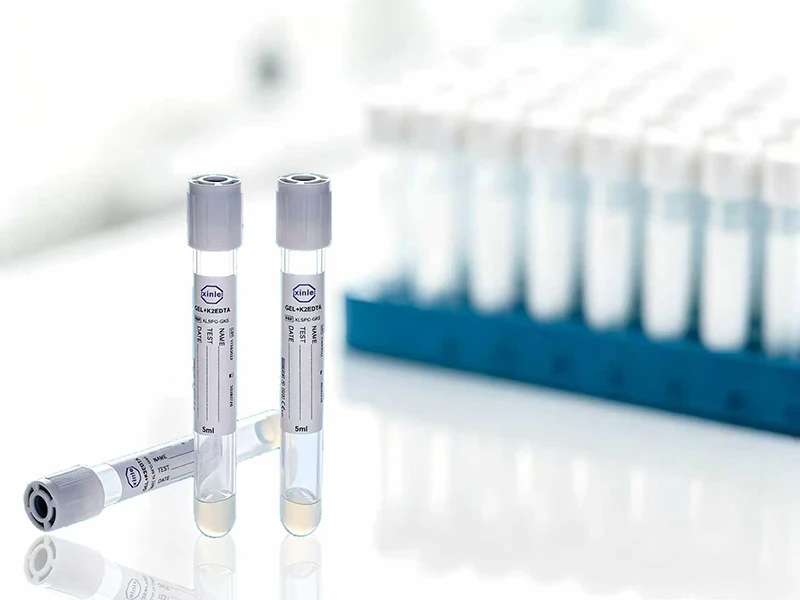
PPTs incorporate several design features that support molecular diagnostic workflows:
| Feature | Description |
| Spray-dried K₂EDTA | Provides undiluted plasma; no dilution effect from liquid additives |
| Inert gel barrier | Forms a physical separation between plasma and cellular components after centrifugation |
| Closed evacuated system | Reduces operator exposure to bloodborne pathogens |
| DNase/RNase-free | Protects nucleic acid integrity |
| Ultra-low endotoxin (≤0.005 EU/mL) | Minimizes interference in sensitive nucleic acid tests |
| In-tube storage | Supports storage at ≤ -20°C for up to 5 years; compatible with -80°C |
These features make PPTs suitable for plasma preparation and preservation for HBV DNA, HCV RNA, HIV RNA, and other PCR/qPCRbased molecular diagnostic assays.
6. Conclusion
The 2025 Nigeria study confirms that PPTs, when handled correctly, perform equivalently to EDTA tubes and can expand access to viral load testing in resourcelimited settings. Concurrently, evidence accumulated from 2006 to 2023 demonstrates that improper handling—particularly centrifugation before transport and insitu freezing—can lead to clinically meaningful overestimation.
These findings are not contradictory. They converge on a single conclusion: PPTs are a reliable tool, but their performance depends on strict adherence to proper handling protocols. Laboratories should establish standardized procedures to ensure that the preanalytical phase does not become a source of diagnostic error.