
Introduction
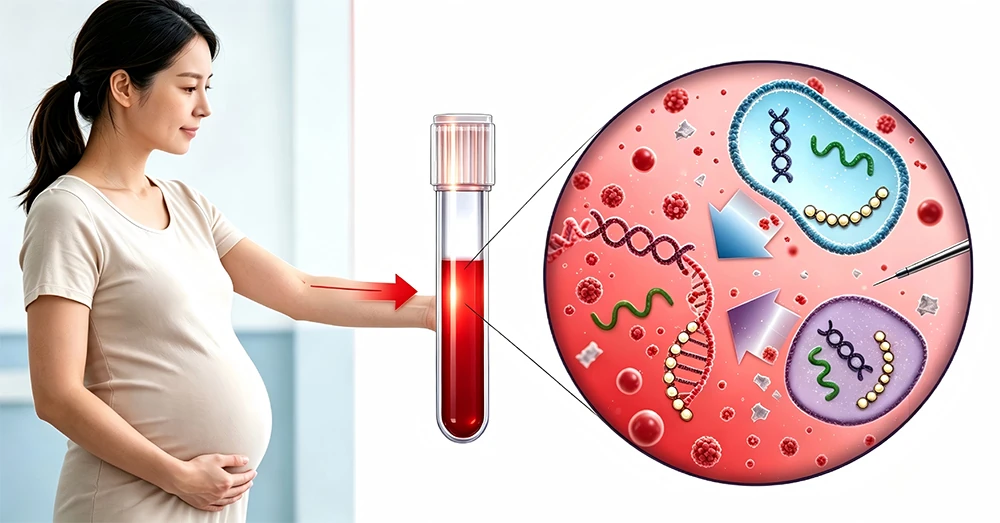
Non-invasive prenatal testing (NIPT) analyzes fetal-derived cell-free DNA in maternal peripheral blood, enabling highly sensitive screening for fetal chromosomal aneuploidies. Currently, the clinical detection rate of NIPT for trisomy 21 exceeds 99%, while the false-positive rate is below 0.1%.
The reliability of NIPT results depends heavily on a core quality parameter, fetal fraction (FF), which is the proportion of fetal-derived cfDNA in total cfDNA in maternal plasma. When fetal fraction falls below approximately 4%, the fetal signal cannot be reliably distinguished from maternal background DNA, significantly increasing the likelihood of test failure or false-negative results.
Many factors affecting fetal fraction have been studied, including maternal body mass index, gestational age, and fetal chromosomal status. However, a large-sample study published in Obstetrics, Gynecology and Reproduction in 2024 identified another pre-analytical variable that has long been underestimated: blood collection tube type.
Blood collection tube type: an overlooked independent variable
Led by Vashukova et al., the study analyzed plasma samples from 5,459 women with singleton pregnancies beyond 9 weeks of gestation. NIPT was performed using semiconductor sequencing, and fetal fraction was determined using a validated bioinformatics algorithm.
The study clearly identified several factors affecting fetal fraction:
– The median fetal fraction was 11.7% (interquartile range: 9.5% to 14.0%).
– Fetal fraction decreased as maternal age and body mass index increased.
– Fetal fraction increased with gestational age and with higher levels of first-trimester biochemical markers (PAPP-A and free β-hCG).
– Fetal fraction was significantly lower in trisomy 18 pregnancies than in normal pregnancies.
The key finding was that, after controlling for all of the above variables, blood collection tube type still significantly affected fetal fraction (p < 0.05).
Three types of blood collection tubes were used in the study cohort: conventional K₂EDTA tubes, Streck Cell-Free DNA BCT tubes, and GBM scf-DNA preservation tubes produced locally in Russia. The results showed that the median fetal fraction in Streck tubes was significantly lower than that in EDTA and GBM tubes.
The clinical significance of this finding is that blood collection tube type is a variable that laboratories can directly control. Unlike factors such as maternal age and BMI, which cannot be modified, selecting an appropriate blood collection tube is a proactive measure that can be taken before testing to improve the reliability of fetal fraction.
Why EDTA tubes dilute fetal fraction
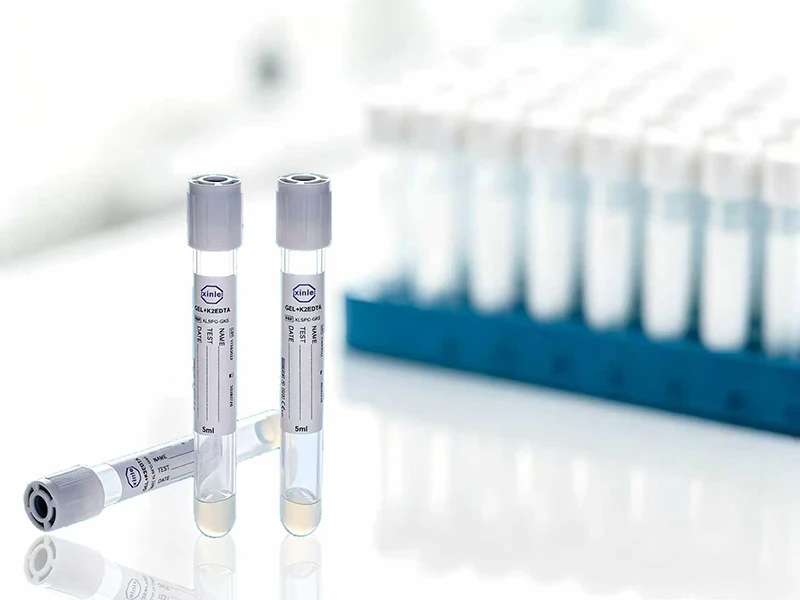
Conventional K₂EDTA tubes are the most commonly used blood collection tubes in clinical practice. EDTA prevents coagulation by chelating calcium ions and can partially inhibit DNase activity. However, EDTA tubes offer no protection against leukocyte lysis.
After blood is collected, leukocytes begin to undergo apoptosis. As cell membranes rupture, large amounts of high-molecular-weight genomic DNA (gDNA) are released into plasma. This gDNA comes from maternal leukocytes rather than the target analyte, and it dilutes the relative proportion of fetal cfDNA in the sample.
This process has been quantified. A study published in Scientific Reports in 2025 (Andersson et al.) evaluated 649 plasma samples from 23 healthy individuals, collected in K₂EDTA, Nor-gen, PAXgene, and Streck tubes. The results showed:
– After 7 days at room temperature, cfDNA concentration in K₂EDTA tubes rose from 2.41 ng/mL to 68.19 ng/mL, a 28-fold increase almost entirely attributable to maternal gDNA released from leukocytes.
– In specialized cfDNA preservation tubes, cfDNA concentration remained stable over the same period (declining by only 13.1% in Streck tubes, while remaining essentially unchanged in Norgen tubes).
The study also noted that cfDNA yield depends on blood collection tube type and the interval from blood collection to plasma separation. High-quality cfDNA can be obtained from plasma separated immediately from EDTA tubes and from plasma separated within one week from specialized preservation tubes. However, once processing is delayed, gDNA contamination in EDTA tubes significantly affects cfDNA purity.
For NIPT, this means that during sample transport and while awaiting processing, maternal gDNA released in EDTA tubes will continuously dilute fetal fraction, potentially pushing an otherwise reportable sample below the testing threshold.
Design principles of specialized cfDNA collection tubes
Specialized cfDNA collection tubes address the limitations of EDTA tubes through two mechanisms:
Cell membrane stabilization. Proprietary additives stabilize the membranes of nucleated blood cells, preventing leukocyte apoptosis and the subsequent release of maternal gDNA.
Nuclease inhibition. The same additives inhibit plasma DNase activity and protect cfDNA molecules from degradation.
These two mechanisms work together to keep the cfDNA composition of whole-blood samples stable at room temperature for 7 to 14 days, without the need for immediate centrifugation or cold-chain transport.
This feature has direct value in clinical operations:
– Decentralized sample collection becomes feasible: primary collection sites do not need centrifuges, and samples can be transported to a central laboratory through standard logistics.
– Reduced repeat blood draws: if the initial result falls within a borderline range, retained samples can be reanalyzed within the stability window without recalling the pregnant woman.
– Consistency in multicenter testing: sample quality across collection sites is consistent and is not affected by differences in transport time.
These advantages have been incorporated into NIPT clinical practice guidelines in several countries. The Center for Medical Genetics Ghent (CMGG) in Belgium, the NHS Genomics Education website in the United Kingdom, and the PathWest test catalog in Australia all list specialized cfDNA collection tubes as recommended or specified requirements for NIPT sample collection.
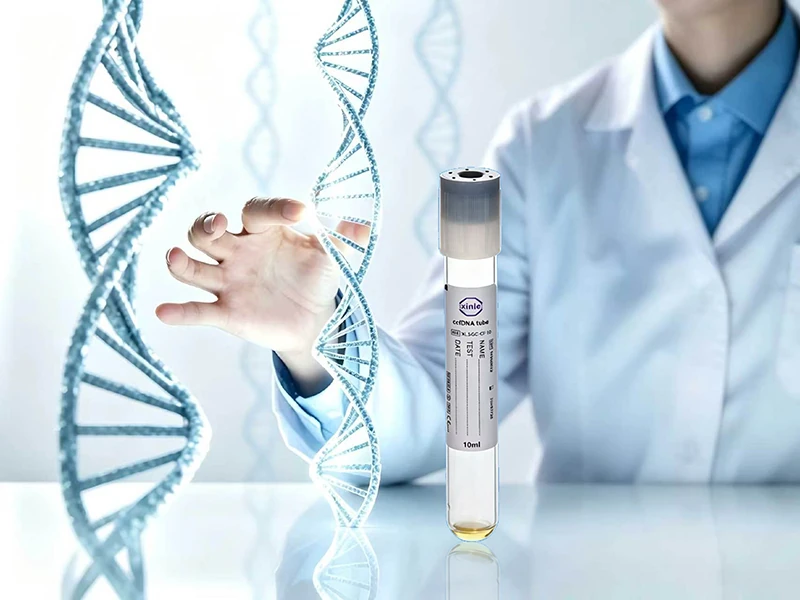
Xinle Medical Cell-Free DNA Collection Tubes
Hebei Xinle Sci & Tech Co., Ltd. (established in 2005) focuses on the research, development, and manufacture of pre-analytical IVD consumables. Its Cell-Free DNA Collection Tubes are designed for the collection, stabilization, transport, and storage of whole-blood specimens for cfDNA analysis.
Key product features:
– Stable for more than 7 days at room temperature (10 to 30°C), with no cold chain required.
– Proprietary stabilizer, formaldehyde-free, avoiding the risk of DNA-protein cross-linking.
– Biomimetic membrane technology protects blood-cell integrity and prevents the release of genomic DNA.
– Compatible with mainstream cfDNA extraction kits and downstream testing platforms.
The 5 mL format is suitable for standard NIPT and routine liquid biopsy applications. The 10 mL format is recommended for applications requiring a larger plasma volume, such as high-depth sequencing or multi-analyte testing.
Instructions for use:
– Gently invert the tube 8 to 10 times immediately after blood collection.
– Store upright at room temperature (10 to 30°C). Do not refrigerate.
– Avoid vigorous agitation during transport.
Summary
NIPT technology has entered a highly standardized stage. Sequencing platforms, algorithm models, and quality-control systems have all been fully validated.
Against this background, the pre-analytical stage, particularly the choice of blood collection tube, is becoming a key variable affecting the reliability of NIPT results. Analysis of 5,459 NIPT cases confirms that blood collection tube type is an independent factor affecting fetal fraction (p < 0.05). A pre-analytical study published during the same period further revealed the mechanism: maternal genomic DNA released from EDTA tubes under delayed-processing conditions is the primary source of fetal fraction dilution.
Specialized cfDNA collection tubes can effectively control leukocyte lysis and cfDNA degradation, offering clear clinical value in safeguarding the integrity of fetal fraction and sample stability. Selecting an appropriate cfDNA collection tube is a fundamental step in ensuring reliable NIPT results.
References
1. Vashukova ES, Tarasenko OA, Maltseva AR, et al. The relationship between clinical‑anamnestic data and cell‑free fetal DNA level assessed by semiconductor sequencing within non‑invasive prenatal testing. Obstetrics, Gynecology and Reproduction. 2024;18(6):820‑834.
2. Andersson D, Kristiansson H, Luna Santamaría M, et al. Evaluation of automatic cell free DNA extraction metrics using different blood collection tubes. Scientific Reports. 2025;15:19364.
3. Pre‑analytical considerations of the recovery and downstream analysis of circulating nucleic acids. Scientific Reports. 2026.
4. Barrett AN, Zimmermann BG, Wang D, Holloway A, Chitty LS. Implementing prenatal diagnosis based on cell‑free fetal DNA: accurate identification of factors affecting fetal DNA yield. PLOS ONE. 2011;6(10):e25202.
Xinle Medical is committed to providing reliable pre-analytical sample-handling solutions for precision diagnostics worldwide.