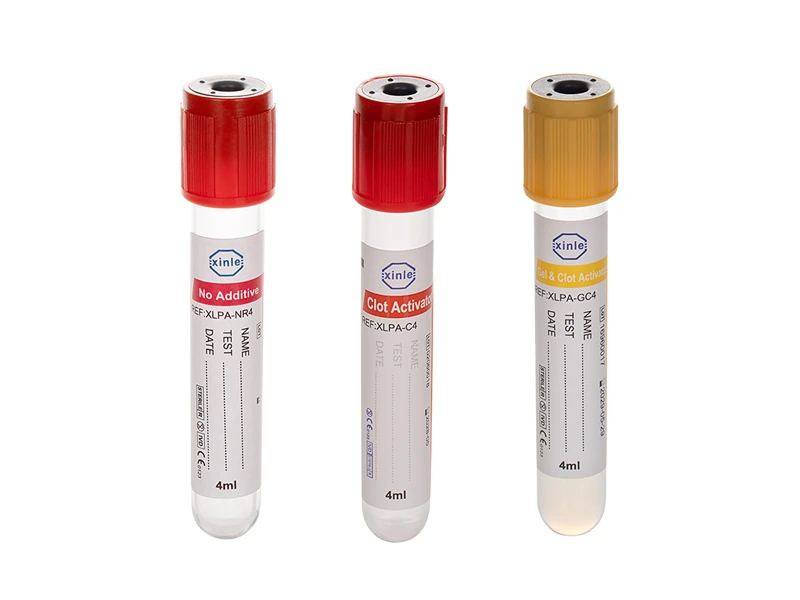

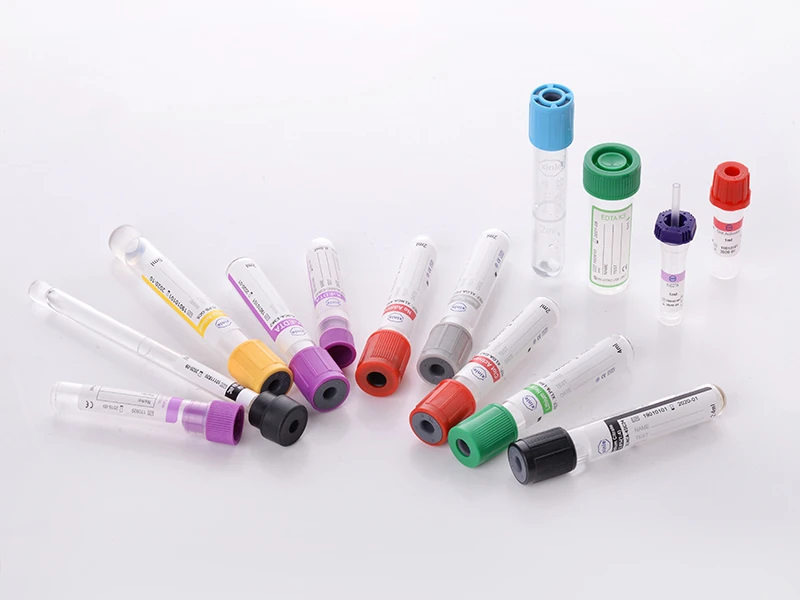
Blood collection tubes come in different colors, and each color generally indicates a specific tube additive, specimen type, or intended laboratory application.
Choosing the correct blood collection tube is important because the tube additive can directly affect specimen quality and laboratory test results. Using the wrong tube may cause specimen rejection, inaccurate results, or the need for recollection.
This guide explains the most common blood collection tube colors, additives, specimen types, and applications, helping healthcare professionals, laboratories, distributors, and medical procurement teams select the appropriate tube for each test.
Important: Tube color conventions may vary between manufacturers, laboratories, and countries. Always follow the specific test manufacturer’s instructions and your laboratory’s validated blood collection procedures.
Blood Collection Tube Color Chart
The following table provides a general guide to commonly used blood collection tube colors.
| Tube Color | Additive | Specimens | Typical Applications |
| Red | No Additive or Clot activator | Serum | Biochemistry, serology, immunology |
| Glod/Yellow | Clot Activator & gel | Serum | Chemistry, immunology, hormone testing |
| Blue | Sodium Citrate | Plasma | Coagulation testing |
| Green | Heparin | Plasma | Clinical chemistry, electrolytes |
| Lavender/ Purple | K2EDTA/K3EDTA | Whole blood | blood bank, transfusion testing, Hematology, CBC, BhA1c |
| Gray | Sodium Fluoride/K2EDTA | Plasma | Glucose, Lactate testing |
| Black | Sodium Citrate | Whole blood | ESR testing |
The exact additive and intended application should always be confirmed according to the product specification.
Blood Collection Tube Selection: 5 Key Factors
1. Identify the Laboratory Test
First determine exactly what test will be performed.
Different tests require different specimen types.
2. Determine the Required Specimen
The laboratory may require:
- Whole blood
- Serum
- Plasma
- Special specimen types
3. Check the Required Additive
Common additives include:
- EDTA
- Sodium citrate
- Heparin
- Sodium fluoride
- Clot activator
- Separator gel
4. Check Tube Volume
Tube volume is important because the correct ratio between blood and additive may be required.
This is particularly important for citrate tubes used in coagulation testing.
5. Follow the Laboratory’s Requirements
Tube color standards are not necessarily identical in every country or laboratory.
Always confirm:
- Tube specification
- Additive
- Volume
- Specimen requirement
- Test manufacturer’s instructions
Common Blood Collection Tube Color Mistakes
Mistake 1: Choosing a Tube Based Only on Color
Color alone does not provide enough information.
Different manufacturers may use different color conventions.
Mistake 2: Using the Wrong Anticoagulant
EDTA, citrate, and heparin have different functions and are not interchangeable.
Mistake 3: Incorrect Filling
Some tubes require a specific blood-to-additive ratio.
This is especially important for coagulation tubes.
Mistake 4: Ignoring the Test Manufacturer’s Instructions
Laboratory analyzers and diagnostic manufacturers may specify particular specimen requirements.
Mistake 5: Confusing Serum and Plasma
Serum and plasma are different specimen types.
Understanding the difference is essential when selecting a blood collection tube.
XINLE Blood Collection Tubes
XINLE provides a range of blood collection tubes designed for different specimen collection and laboratory testing requirements.
Our product portfolio can include different tube configurations such as:
- EDTA blood collection tubes
- Sodium citrate tubes
- Heparin tubes
- Serum tubes
- Serum separator tubes
- Fluoride/oxalate tubes
- Other specialized blood collection tubes
For distributors, importers, hospitals, laboratories, and medical supply companies looking for a reliable blood collection tube manufacturer, XINLE can provide product specifications, packaging solutions, OEM/private-label support, and export-oriented supply services.
Looking for the right blood collection tube for your market? Contact XINLE to discuss tube specifications, additives, sizes, packaging, OEM requirements, and distribution opportunities.